


- door Daniel Pawlik
Furnishing a living room – How to properly plan functional zones in the living room and bedroom
- door Daniel Pawlik
Do you remember the legendary apartment from "The Honeymooners," where the whole family lived in one room? Or the studio apartment from "Alternative 4," where every square meter served multiple functions simultaneously?
Today's apartments aren't much bigger, but our needs are greater.
At Pillovely, we believe that well-planned functional zones are the key to comfortable living – whether you're in an M-2 like the characters in "Świat według Kiepskich" (The World According to the Kiepskis) or a spacious house like in "Rancz" (The Ranch).
The modern living room is not just a place to watch TV. It's a home office for remote work, a gym for morning yoga, a cinema for evening movies, a family hub, and sometimes even a guest room.
How can all these functions be combined in one space? The answer lies in thoughtful zoning.
This is where most of family life takes place. The sofa plays the main role – ideally one that can accommodate the whole family to watch "Father Matthew" or the latest Netflix hit on Sundays.
The ideal relaxation area consists not only of furniture but also the entire surroundings: a soft rug, an easily accessible coffee table, appropriate lighting, and acoustics.
If you live in a small apartment, opt for a corner sofa bed – an elegant sofa during the day, a guest bed at night. This solution dates back to the communist era but has been modernly reinterpreted.
Remember to maintain a distance of at least 3 meters between the sofa and the TV – that's how much space your eyes need not to get tired during a "The Witcher" marathon.

The home office is no longer a luxury – it has become a necessity. Not everyone has a separate office like the director of "Miśek Uszatek."
However, you can create a functional work area in the living room that "disappears" after work, like a desk in a wardrobe.
The best solution is a console table behind the sofa – it serves as a decorative side table during the day, and when unfolded, it becomes a desk.
A chair on wheels can be brought in from another area, and a laptop and documents can be stored in an elegant chest of drawers.
It is important that the workspace has good natural light – preferably by a window, but not directly under it, to avoid eye strain.
A modern entertainment area is not just a TV on the wall. It is a multimedia center with game consoles, a music system, and perhaps even a mini-bar for house parties.
The TV furniture should accommodate all devices but also be aesthetically pleasing and visually light so that it does not dominate the room like the black monolith from "2001: A Space Odyssey."
If you have children, consider a play area – a colorful rug with toy boxes in stylish baskets that can be stowed under the console after playing.
It's like a Matryoshka doll – everything fits inside, and visual clutter is tamed.
Even in the smallest living room, you can find a place to read.
All you need is an armchair by the window, a small bookshelf, and a reading lamp.
It can be a vintage armchair from your grandmother or a modern wingback armchair in an intense color – like Paweł Jasiński's armchair from "Kogla Mogla."
If space is very limited, a pouf that can serve as a seat, footrest, and bookshelf is recommended.
Or perhaps a hanging basket chair that takes up minimal space and offers maximum relaxation?
This is a solution straight from the 1970s but still as relevant as baking gingerbread on Christmas Eve.

The modern bedroom is often the only private sanctuary in the house.
Here we not only sleep but also get dressed, relax, work, or sometimes read.
The key is to create areas that do not interfere with each other – because it's difficult to fall asleep next to a desk covered with bills.
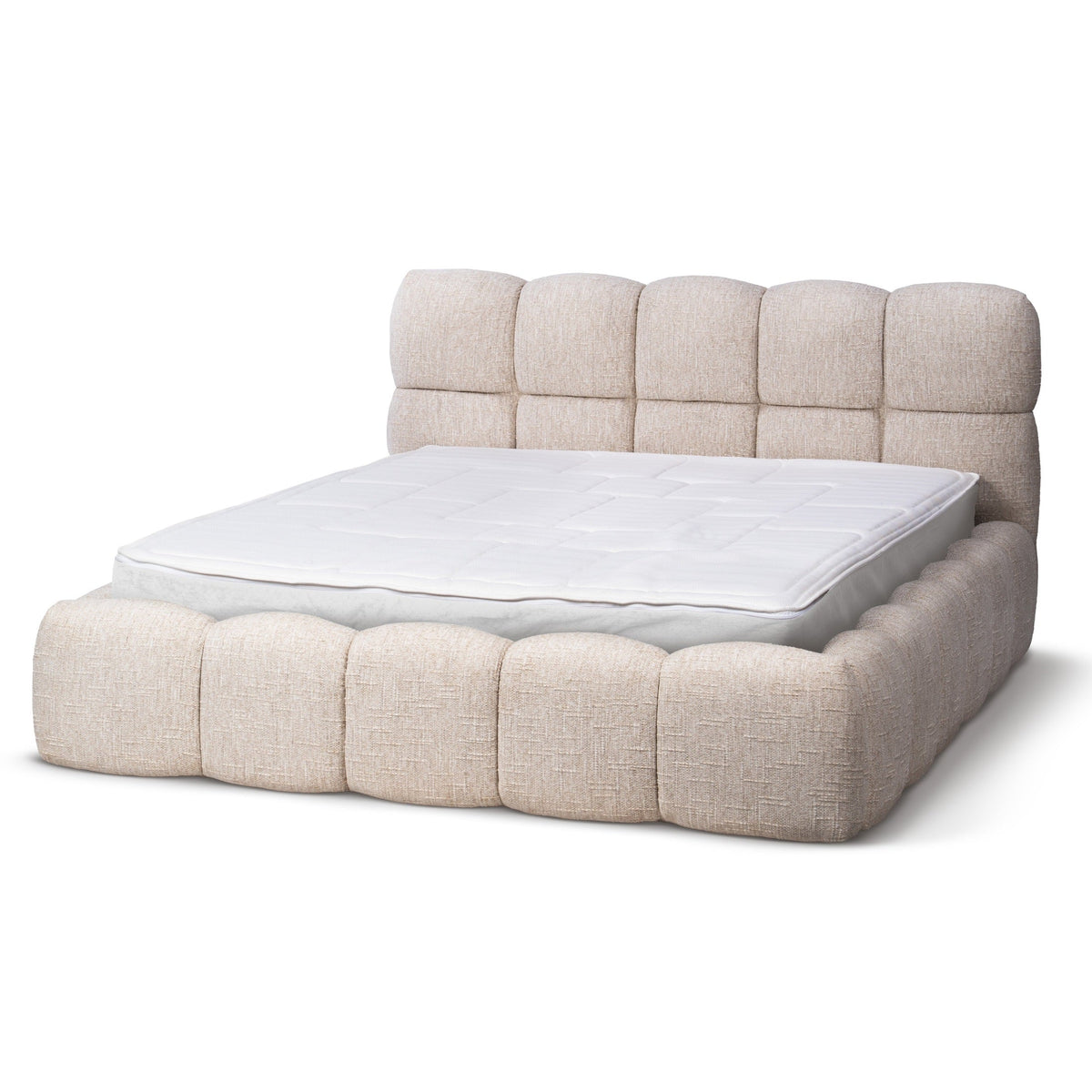
The bed is undeniably the star of the bedroom. It should be positioned so that you can see the room's entrance – this provides a sense of security.
It's best if it's accessible from both sides – no one likes climbing over their partner at night.
Nightstands are not just decorative. They are the command center of the bedroom – a place for a book, water, phone, and all your most important sleeping essentials.
In cramped spaces, wall shelves above the bed are excellent.
Nightstand lighting is a must – lamps or wall lights with adjustable brightness allow you to read without illuminating the entire bedroom like a stadium.
Ideally, there would be a separate dressing room, but in reality, there's often only a wardrobe in the bedroom.
The key is optimal space utilization – drawers at the bottom, rails at different heights, shelves at the top for seasonal items.
If you have more space, design an open wardrobe – open shelves and clothes rails look like they belong in a boutique but require absolute order.
A mirror is not only a practical element but also an optical trick that enlarges the room.
In a small bedroom, a mirror that covers the entire wall visually doubles the space.
If you have some space, create a small relaxation zone in your bedroom.
A window seat with a footrest, a bookshelf, and a soft blanket – that's all you need for a cozy evening with tea and reading.
You can also add a dressing table with a mirror and space for cosmetics – every woman deserves her own private backstage area where she can feel special every day.
Sometimes the bedroom is the only place for a home office.
Then it is crucial to visually separate the work area from the sleeping area.
A screen, a curtain, or a desk placed with its back to the bed can be helpful.
After work, it's worth "switching off the office" – putting away the laptop, closing documents, and pushing the chair under the desk.
This will help your mind switch to relaxation mode faster.

Movement and Communication
Each zone should be easily accessible but not at the intersection of main thoroughfares.
No one likes walking through the reading area to get to the kitchen.
Plan your movement paths like an architect – short, logical, and convenient.
Each zone requires different lighting:
LEDs with adjustable color temperature are the future – cool white light is stimulating in the morning, warm yellow light helps you relax in the evening.
Each area needs clever storage solutions – poufs with storage, tables with drawers, shelves and baskets under consoles.
Areas that are easily changeable are best – lightweight furniture, movable lighting, folding tables.
Life changes, so your interior design should too.
In a studio apartment or a two-room apartment, every centimeter is worth its weight in gold.
Multifunctional furniture fits well here – a sofa with a sleeping function, a coffee table with drawers, an ottoman with space for blankets, a mirror that hides a desk.
Visually dividing the space also helps – different wall colors, rugs, screens, and curtains structure the room and add depth.
Well-planned functional zones are not magic but the result of conscious planning.
The key is to understand your needs, daily rhythm, and habits.
Observe how you live in your home, what bothers you, and what brings you joy.
At Pillovely, we believe that everyone deserves a space that suits their life. Whether an apartment or a house – your interior should serve you, not get in the way.
Because a true home is one where every activity has its place and every spot tells your story.
Loveseat - What Is It, Who Is It For and How to Choose the Right One?
A loveseat is one of those pieces of furniture that can completely change how a room works. It is smaller than a classic sofa, more generous than a single armchair and often easier to place in compact interiors. A loveseat can create a cosy sitting area in a small living room, soften a bedroom corner, complete a reading nook or work as an additional seat next to a larger sofa. Its strength lies in proportion: it gives you the feeling of a sofa without taking over the whole room.
Lees meerover Loveseat - What Is It, Who Is It For and How to Choose the Right One?
EU vs UK Bed Sizes – Will UK Bedding Fit a European Bed?
European beds are 200 cm long, UK beds 191 or 198 cm. A simple EU vs UK bed size table in cm – and what it means for your mattress and fitted sheets.
Lees meerover EU vs UK Bed Sizes – Will UK Bedding Fit a European Bed?
Autumn colors at home – shades that bring peace and warmth
Do you remember autumn from your childhood, when the leaves changed color like a kaleidoscope, and your mom would pull out the pumpkin-colored sweater she'd worn since college? Or those evenings in front of the TV while a storm raged outside, and the lamplight in the house gave everything a warm, amber hue? Those were the days when no one talked about "color palettes" or "color stories"—colors simply existed, as natural as breathing. Today, when we can choose from 50 shades of gray (and no, I'm not talking about THAT book), we sometimes lose track of what truly makes a home feel cozy. At Pillovely, we believe that autumn colors aren't a trend—they're a return to what makes us feel safe. Because "You are someone"—someone who deserves a space filled with colors that snuggle like a grandma's blanket.
Lees meerover Autumn colors at home – shades that bring peace and warmth





Delen:
Make Way for Winter – Autumn Cleaning and Clever Wardrobe Tips
Scandinavian Style Living Room – Full of Simplicity and Functionality